Free Printable Chore Chart by Age (4-6, 7-9 and 10-12)
Free printable chore charts by age: three weekly charts for ages 4-6, 7-9 and 10-12, with age-appropriate jobs, blank rows and a weekly goal box.
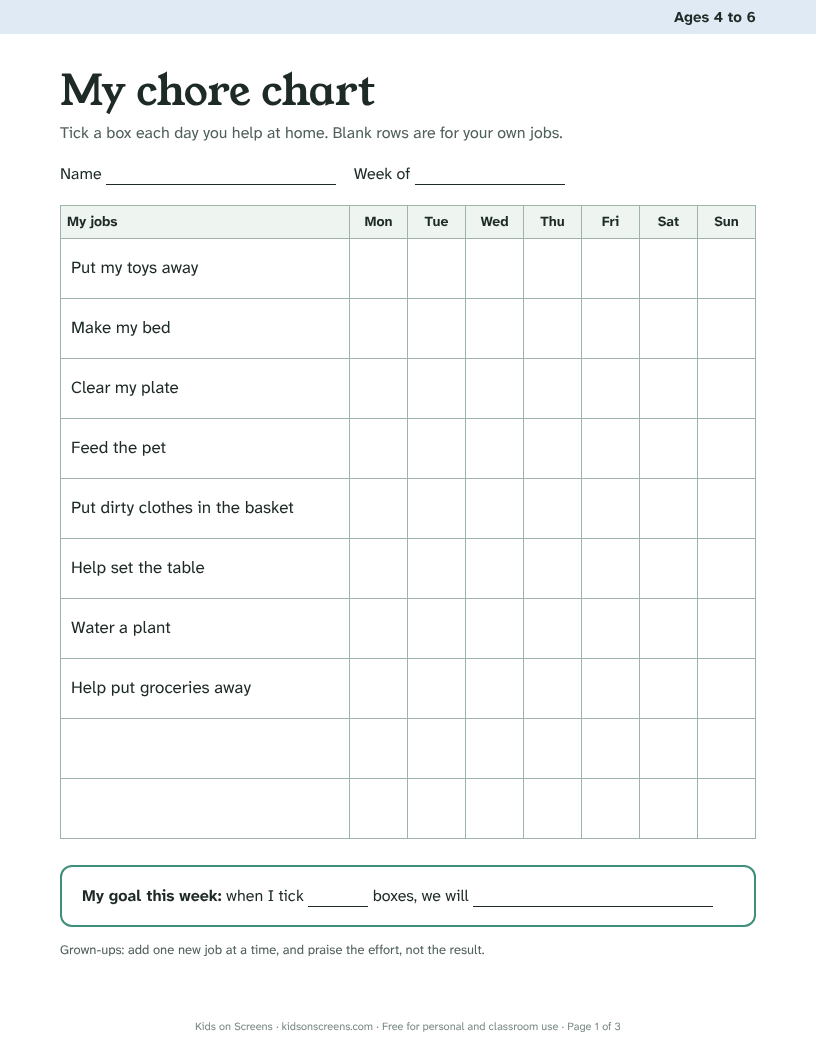
These free chore charts give each age group its own page: ages 4 to 6, 7 to 9 and 10 to 12. Each one lists eight age-appropriate jobs, two blank rows for your own, a tick box for every day of the week, and a goal box to agree a small reward together. Print just the page you need, or all three for siblings.
What’s on each chart
| Chart | Jobs on the chart |
|---|---|
| Ages 4 to 6 | Put toys away, make the bed, clear the plate, feed the pet, dirty clothes in the basket, help set the table, water a plant, help put groceries away |
| Ages 7 to 9 | Make the bed, set and clear the table, put laundry away, wipe the table, sweep a floor, load or unload the dishwasher, help make dinner, pack lunch |
| Ages 10 to 12 | Change bedsheets, do their own laundry, vacuum a room, clean the kitchen after dinner, clean the bathroom sink, cook a simple meal with a grown-up, care for a pet, help with yard work |
The jobs follow the age lists published by the American Academy of Pediatrics (HealthyChildren.org) and the American Academy of Child and Adolescent Psychiatry (AACAP). Every child is different, so treat the lists as a starting point.
How to use the chart
- Pick three or four jobs to start. The AAP suggests adding new tasks one at a time, because a long list can be overwhelming. Cross out the rest for now.
- Show how each job is done. Do it together a few times before it goes on the chart.
- Do jobs at the same time each day. A routine, like clearing the table after dinner, makes chores the norm rather than an argument.
- Fill in the goal box together. For example: when I tick 20 boxes, we will bake cookies on Saturday.
- Praise the effort. The AAP advises praising your child’s effort in each task, not the outcome.
- Review it each week. Swap jobs that have become easy for new ones.
Why chores help
The AAP says helping to keep the home running smoothly “boosts a child’s self-esteem”, and that chores teach that life takes work as well as play. AACAP adds that chores help children learn time management and accept responsibility in the family, and can give a child who struggles elsewhere a chance to succeed.
Chores also fill the time after screens go off. Pair the chart with our daily routine chart, which puts screen time after the day’s jobs, and keep our screen-free activity cards ready for the rest of the afternoon.
Rewards: allowance, stickers or neither?
The AAP leaves it to you: you “may also want to consider tangible rewards like allowances and stickers tied to completed chores”, and it says encouragement works better than scolding. Some families pay for extra jobs only, so everyday chores stay part of family life. The goal box works for any approach: a small treat, a trip to the park, or picking the family movie.
Make it fit your child
| Situation | What to change |
|---|---|
| Child is between two charts | Print both and take jobs from each. |
| Several children | Give each their own page so nobody argues over boxes. |
| Job too hard | Cross it out and write an easier version in a blank row, such as “fold towels” instead of “do my own laundry”. |
| Chart has stopped working | Change the jobs or the reward, and move the chart to a new spot. |
Want to keep the chart going week after week? Slide it into a clear plastic sleeve and use a dry-erase marker, or print a fresh copy each Sunday.
Questions parents ask
What chores can a 5-year-old do?
The American Academy of Pediatrics lists making their own bed, setting and clearing the table, putting toys away and sweeping floors for ages 5 to 7. The ages 4 to 6 chart starts with simpler jobs like putting toys away and clearing their plate.
Should I pay my child for chores?
It's up to you. The AAP says you may want to consider rewards like allowances and stickers tied to completed chores, and that honest praise for effort is one of the most effective ways to motivate a child. The goal box on the chart works with either.
How many chores should a child have?
Start small. The AAP suggests introducing new tasks one at a time, because a long list can be overwhelming. Cross out jobs your child isn't ready for and add them back later.
What paper size is the chart?
US Letter, three pages, one per age group. Print only the page you need. It also prints well on A4 with 'Fit to page'.